
Although a single number cannot tell the whole story when assessing body weight, certain measurements provide a practical starting point. In everyday life, the question “Is my weight normal?” is often answered by looking at waist measurements, clothing size, or changes on the scale. However, a more standardized framework is needed from a health perspective. This is where body mass index comes into play, aiming to provide a general classification by relating height to weight. This measurement offers a quick indication of whether a person is underweight, within the normal range, overweight, or in the obesity category. However, BMI is not a diagnostic test on its own. Since it does not account for many variables, such as muscle mass, age, sex, fat distribution, and metabolic risks, the results may not always be interpreted with the same degree of accuracy. Nevertheless, it is a widely used tool for regular monitoring, lifestyle planning, and risk screening. It is particularly useful in weight management, nutritional planning, and establishing physical activity routines because it provides a measurable reference point.
What Is Body Mass Index (Height-Weight Index)?
BMI or the body mass index concept essentially attempts to evaluate body weight within a specific range in relation to height. It is also commonly referred to as the height-weight index, a term that clearly explains the principle behind the measurement: Height serves as a fixed reference, while weight is a variable value. When considered together, they provide a quick overview of a person's general weight status. Although this approach is not sufficient on its own for medical follow-up, it offers practical advantages in population-level screenings and initial assessments. Similarly, the term “weight index” refers to the same method, with the aim of determining whether a person's weight falls within the expected range for their height. However, there is an important distinction: BMI does not directly measure body fat percentage; it only considers the relationship between height and weight. For example, a person who exercises regularly and has high muscle mass may have a high BMI, but this does not necessarily mean they have excess body fat. Likewise, as people age, muscle mass may decrease while body fat increases, potentially raising metabolic risks even when BMI remains within the normal range. Therefore, body mass index should not be considered a measurement that determines decisions on its own, but rather an indicator that becomes meaningful when evaluated alongside other measurements. In clinical assessments, it provides a more accurate framework when interpreted together with waist circumference, fat distribution, blood test results, and lifestyle habits.
How Is Body Mass Index Calculated?
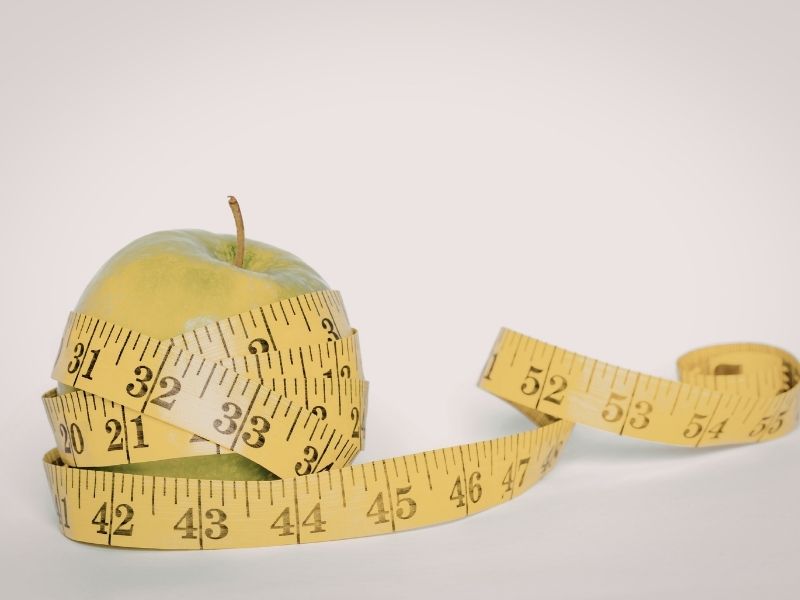
When calculating body mass index, the aim is to convert your weight into a standardized value based on your height. This process is commonly searched for as BMI calculation or body mass index calculation and actually consists of a few simple steps. First, you should express your height in meters; for example, a height of 170 cm is recorded as 1.70 m. Next, square your height: 1.70 × 1.70 = 2.89. In the final step, divide your weight in kilograms (let us use 70 kg as an example) by this number: 70 ÷ 2.89 = 24.2. The resulting value represents your body mass index, also known as the height-weight index. This calculation is based on the formula “weight (kg) / height (m)²”. To make measurements more consistent, it is important to use the scale under similar conditions. Weighing yourself in the morning after waking up, after using the bathroom, and while wearing similar clothing helps reduce daily fluctuations. Additionally, calculating a weekly average rather than focusing on a single day provides a more accurate picture by balancing the effects of factors such as water retention and stress.
| Height (cm) | Height (m) | Height² (m²) | Weight (kg) | BMI Result (weight / height²) |
| 170 | 1.70 | 2.89 | 55 | 19.0 |
| 170 | 1.70 | 2.89 | 65 | 22.5 |
| 170 | 1.70 | 2.89 | 75 | 26.0 |
| 170 | 1.70 | 2.89 | 85 | 29.4 |

What Should Your Body Mass Index Be?
There is no single answer to this question because determining what BMI should be also involves a person's age, current health condition, and lifestyle. Nevertheless, body mass index ranges are used to provide a practical framework: Below 18.5 is classified as underweight, 18.5–24.9 as normal weight, 25–29.9 as overweight, and 30 or above as obesity. However, this classification alone does not provide a definitive assessment. This is because body mass index is calculated using height and weight and does not directly measure body fat percentage or muscle mass. Therefore, the same value may have different meanings for different individuals. For example, health risks may increase in someone with a large waist circumference, while an individual who exercises regularly and has high muscle mass may have a higher BMI without this necessarily indicating an unfavorable condition. When setting goals, the concept of ideal weight should not be reduced to a single number. Waist circumference, blood sugar, blood pressure, and daily physical activity levels should be evaluated together. Since muscle loss and body fat percentage may change with age, interpreting body mass index according to age also becomes more meaningful. Ultimately, viewing body mass index as a starting point and tailoring goals and plans to the individual is a more appropriate approach.
Body Mass Index Chart
To understand the meaning of body mass index results, it is necessary to know the corresponding ranges. For this reason, many people directly search for a body mass index chart, as the calculated number alone does not provide enough information; the category it falls into is what matters. The commonly used term “BMI” is an abbreviation of “Body Mass Index” and refers to the same measurement, namely a standard classification calculated using height and weight. People who want to simplify the calculation process may also search for terms such as “BMI”, “weight index”, or “height-weight index”, all of which aim to obtain the same result. However, it is important to remember that body mass index does not directly measure body fat percentage or muscle mass. Therefore, when the value is high, waist circumference, fat distribution, blood test results, and lifestyle habits should be evaluated together rather than focusing solely on the number on the scale. In addition, when setting goals, ideal weight should not be viewed as a single figure; a person's age, activity level, and medical history also matter. For this reason, it is more appropriate to think of the chart not as a label but as a starting map that indicates your current position.
| Body Mass Index Range | General Classification |
| Below 18.5 | Underweight |
| 18.5 – 24.9 | Normal weight |
| 25.0 – 29.9 | Overweight |
| 30.0 – 34.9 | Obesity (Class 1) |
| 35.0 – 39.9 | Obesity (Class 2) |
| 40.0 and above | Morbid obesity (Class 3) |
Is Body Mass Index Different for Women and Men?
Body composition naturally differs between women and men. Fat distribution, muscle proportion, and hormonal balance may cause the same BMI value to correspond to different physical appearances and risk profiles. For this reason, people frequently search separately for “what should BMI be for women” and “what should BMI be for men”. The BMI formula is the same for both sexes; what differs is how the same value is interpreted. Women may physiologically have a higher proportion of body fat, and this does not necessarily indicate an unfavorable health condition. Men, on the other hand, may more frequently accumulate fat around the abdominal area, which can be more strongly associated with metabolic risks. Therefore, even when BMI is within the normal range, a high waist circumference may indicate increased risk. Similarly, a physically active man with high muscle mass may have an elevated BMI; if his body fat percentage is low, the result should be interpreted differently. At this point, “body mass index calculation” alone is not sufficient. Waist circumference, fat-to-muscle balance, and lifestyle habits should also be discussed after the measurement. In short, the difference between women and men does not lie in how BMI is calculated but in how the results relate to health risks. Therefore, rather than quickly labeling the same number as “good” or “bad”, an individualized assessment is more appropriate.
How Is Body Mass Index Evaluated in Children?
Weight assessment in children differs from that in adults because growth and development are ongoing. For this reason, it is not appropriate to define a single “ideal BMI” for children. Instead, percentiles (growth charts) based on age and sex are used. The same BMI value may have different meanings at different ages because height and body composition change rapidly during growth. A child's appetite, activity level, sleep patterns, and family history are also included in the assessment. Furthermore, the approach to “weight loss” in children is not targeted in the same way as in adults. In many cases, the goal is to support healthy growth, slow unnecessary weight gain, and establish balanced eating habits. One of the most common mistakes parents make at this stage is turning to short-term restrictive diets. However, restrictive approaches during childhood may negatively affect both physical development and eating behavior. Therefore, BMI assessment in children should always be performed within a pediatric framework, using growth charts and regular monitoring. Ultimately, BMI in children is a screening tool, not the sole criterion for making decisions, and interpretation must always be based on age-appropriate standards.
Does Body Mass Index Always Provide Accurate Results?
Although BMI is widely used, it cannot always be considered completely accurate because it does not measure body composition; it only relates height to weight. In individuals with high muscle mass, BMI may appear higher than their actual body fat level would suggest, even though they may not have excess body fat. Conversely, some people with low muscle mass and high body fat percentage may have a normal BMI despite having elevated metabolic risks. Therefore, BMI is a starting point rather than a final decision-making tool. In everyday practice, people may see their results by searching for terms such as “calculate body mass index”, but additional measurements are necessary for accurate interpretation. When indicators such as waist circumference, body fat analysis, blood sugar levels, and blood pressure are evaluated alongside BMI, they provide a more meaningful overall picture. Age is also an important factor, as muscle loss and increased body fat may occur with aging, making BMI insufficient on its own. In short, BMI is useful for quick screening and monitoring, but it should not be regarded as the only reliable measure when setting personal goals. The most appropriate approach is to use BMI as an indicator and interpret it together with an overall health assessment. This allows for a more balanced plan without creating a false sense of security or unnecessary concern.

What Should You Do If Your BMI Is High?
When BMI is high, the first step is not to panic but to interpret the result correctly. First, it should be checked whether the measurement was performed accurately. Then, waist circumference, lifestyle habits, and any existing symptoms should be evaluated together. At this point, many people look at their results and search for quick solutions; however, sustainable steps are more effective. Increasing daily physical activity, improving sleep patterns, and practicing portion control can make significant contributions in the initial stages. Establishing regular meal patterns, reducing processed food consumption, and maintaining an adequate balance of protein and fiber can make appetite control easier. It is important to be realistic when setting weight goals. Rather than aiming for substantial weight loss in a short period, small weekly improvements tend to produce more lasting results. Professional support can help many people make progress more effectively during this process. An internal medicine or endocrinology specialist may assess metabolic risks through blood tests when necessary, while a dietitian can develop an individualized nutritional plan and provide ongoing follow-up. In addition, if excess weight is significant, accompanying diseases are present, or sufficient progress cannot be achieved despite lifestyle changes, obesity treatment options may be expanded following a medical evaluation. For some individuals, consultation with an obesity surgery team and an eligibility assessment may be considered. This does not mean that surgery is necessary; rather, it is a specialist evaluation intended to determine the most appropriate approach based on the person's risks, body mass index, and overall health condition.
Click here to measure your Body Mass Index.
Frequently Asked Questions About Body Mass Index