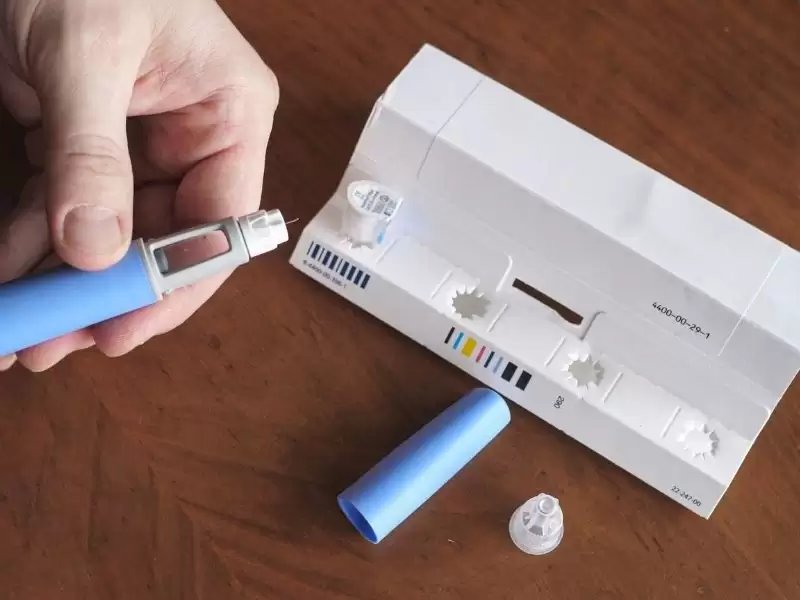
In recent years, weight loss injections (GLP-1 receptor agonists and GIP/GLP-1 receptor agonists) have become an important turning point in the treatment of obesity. These medications not only reduce appetite but also increase the feeling of fullness, decrease energy intake, and provide significant weight loss in appropriately selected patients. However, these treatments are not a miraculous solution on their own. Long-term success depends on supporting medication therapy with healthy nutrition, regular physical activity, and lifestyle changes.
One of the most common problems encountered in clinical practice is that patients consider the medication sufficient on its own and overlook the basic principles of treatment. Here are the most common mistakes made while using weight loss injections:
1. Starting Treatment Without Medical Supervision and the Necessary Assessments
GLP-1 treatments are not suitable for everyone who wants to lose excess weight. The treatment decision should be made by evaluating the person’s body mass index (BMI), accompanying health conditions, medications, and detailed medical history.
These medications may not be suitable for people who have previously had inflammation of the pancreas (pancreatitis), medullary thyroid cancer, or a hereditary condition known as MEN-2. Therefore, the necessary blood tests should be performed and the person’s general health status should be assessed before treatment begins. Otherwise, certain important risks may go unnoticed.
For this reason, weight loss injections should always be evaluated by a physician experienced in obesity treatment and used under regular medical supervision.

2. Neglecting Protein and Water Intake
The most noticeable effect of these medications is appetite reduction. However, reduced appetite does not mean that the nutrients required by the body should also be reduced.
If you do not consume enough protein while losing weight rapidly, your body may begin to lose muscle as well as fat. This may lead to muscle loss known as "sarcopenia." A reduction in muscle mass may slow the metabolism, make you feel weaker, and increase the risk of regaining the weight you have lost in the future.
Therefore, meeting the daily protein requirement throughout treatment is extremely important.
Adequate protein intake should be planned according to the person’s age, weight, and level of physical activity, and this process should be managed with the support of a dietitian whenever possible.
Drinking enough water during treatment is just as important as proper nutrition. GLP-1 medications may reduce the sensation of thirst as well as appetite. In addition, nausea and vomiting experienced by some people may cause further fluid loss. When an adequate amount of water is not consumed, problems such as dehydration, constipation, and, although rarely, impaired kidney function may occur. Therefore, water should be consumed regularly throughout the day without waiting to feel thirsty.
During treatment, an adequate amount of fluid should be consumed according to individual needs, and water should be drunk regularly without waiting for thirst to occur.
3. Ignoring Sarcopenia (Muscle Loss)
A lower number on the scale does not always indicate healthy weight loss.
During rapid weight loss, inadequate protein intake and failure to perform resistance exercises may cause loss of muscle mass as well as fat tissue. This condition is known as sarcopenia and may negatively affect metabolic health in the long term.
The aim of treatment is not only to lose weight but also to preserve muscle mass as much as possible while reducing fat mass. Therefore, it is important to monitor body composition throughout the process and follow a nutrition and exercise plan designed to prevent muscle loss.
4. Neglecting Physical Activity
Although appetite reduction makes weight loss easier, it does not replace exercise.
Resistance exercises and regular physical activity, in particular, contribute to the preservation of muscle mass, help support metabolic rate, and make long-term weight control easier.
In addition to regular weekly walking programs, strength exercises appropriate for the person’s health status are also recommended as part of the treatment plan.
5. Relying Only on Medication Without Changing Your Lifestyle
One of the most common mistakes is believing that medication alone will provide permanent weight loss.
Weight loss injection treatments provide an important opportunity to develop healthy eating habits and learn portion control. However, if the previous eating pattern continues and physical activity is neglected, appetite may increase again after treatment is discontinued, and weight regain may occur.
For long-term success, medication therapy should not be viewed as a "shortcut" but as a temporary tool that supports lifestyle change.

Conclusion
GLP-1 and similar weight loss injections are currently among the effective options used in the treatment of obesity. However, to achieve successful and sustainable results, treatment should be combined with medical supervision, a personalized nutrition plan, adequate protein and fluid intake, regular physical activity, and permanent lifestyle changes.
It should be remembered that the most important factor in treatment is not the medication used, but the healthy habits the patient develops throughout the process.
References
• Turkish Society of Endocrinology and Metabolism (TEMD). Obesity Diagnosis and Treatment Guideline. Ankara: TEMD Publications; 2024.
• Jastreboff AM, Aronne LJ, Ahmed NN, et al. Tirzepatide Once Weekly for the Treatment of Obesity. N Engl J Med. 2022;387(3):205-216.doi:10.1056/NEJMoa2206038.
• Jastreboff AM, le Roux CW, Stefanski A, et al. Tirzepatide for Obesity Treatment and Diabetes Prevention. N Engl J Med. 2025;392(10):958-971.doi:10.1056/NEJMoa2410819.
• Lincoff AM, Brown-Frandsen K, Colhoun HM, et al. Semaglutide and Cardiovascular Outcomes in Obesity without Diabetes. N Engl J Med. 2023;389(24):2221-2232. doi:10.1056/NEJMoa2307563.
• Pi-Sunyer X, Astrup A, Fujioka K, et al. A Randomized, Controlled Trial of 3.0 mg of Liraglutide in Weight Management. N Engl J Med. 2015;373(1):11-22. doi:10.1056/NEJMoa1411892.
• West R, Koutoukidis DA, et al. Weight regain following the cessation of medication for weight management: a systematic review and meta-analysis. BMJ. 2025;392:bmj-2025-085304. doi:10.1136/bmj-2025-085304.
• A systematic review of the effect of semaglutide on lean mass. PubMed. 2024.
• Muscle loss and GLP-1 receptor agonists use. PMC. 2025.
• Glucagon-like peptide-1 receptor agonists: stay hydrated. Medsafe. 2025.
• Can glucagon-like peptide-1 receptor agonists cause acute kidney injury? PMC. 2022.