
We often do not realize how much sugar we consume.
Many of us say, “I do not like sweets, I do not use much sugar,” but in reality, we consume more than we notice. Because sugar is no longer just something we add to our tea; it is hidden in almost every packaged food.
Yogurt, granola, fruit juice… they sound quite healthy, don’t they?
But be careful! Depending on the brand we choose, these three can cause us to exceed even the amount of sugar we should consume in a day. The World Health Organization recommends that adults consume no more than 30 grams of “free sugar” per day. This is about six teaspoons. However, when you consume flavored yogurt, “natural” granola, or freshly squeezed fruit juice, it is very easy to exceed this amount in just one meal.
So why is it dangerous?
Every excess amount of sugar entering our body rapidly raises blood sugar. Over time, this can pave the way for insulin resistance, weight gain, type 2 diabetes, and heart diseases. Moreover, honey, agave syrup, or fruit juice concentrate, which we may consider “natural,” are also included in this free sugar group. In other words, they all create the same effect.
There is a big difference between eating a whole fruit and drinking its juice.
While the fiber in fruit helps balance blood sugar, this fiber is lost when the fruit turns into juice. The result: a faster rise in sugar. Therefore, eating an orange is a much better choice than drinking a glass of orange juice.
Likewise, many granolas that we think of as a “healthy breakfast” are also full of sugar.
A bowl made with plain oatmeal prepared at home, fresh fruit, and a handful of walnuts is both more nutritious and much safer in terms of sugar. If you like yogurt, slice fruit into plain yogurt and let its sweetness come from nature.
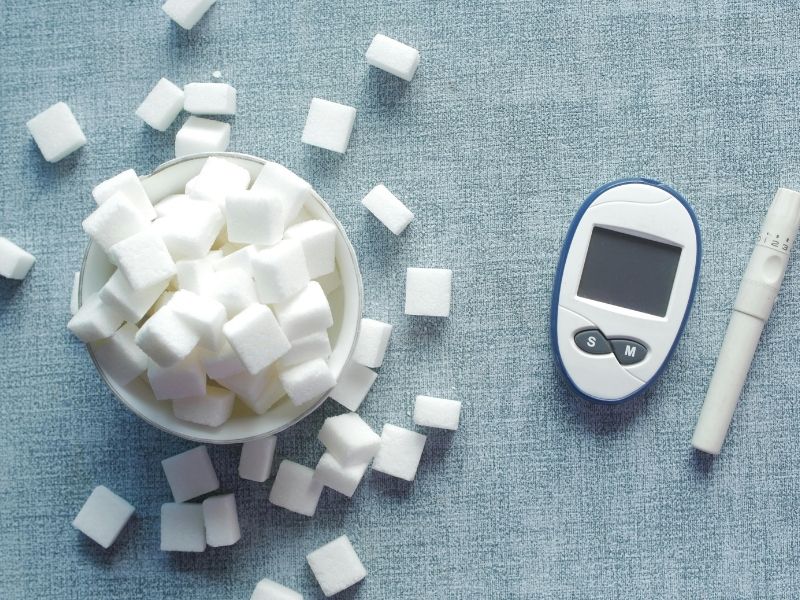
Remember, hidden sugar is not only found in desserts.
There may be sugar in ketchup, salad dressings, and even canned fish. If you see words such as “glucose-fructose syrup,” “fruit juice concentrate,” “honey,” or “agave” on labels, these are all different names for sugar.
Obesity and diabetes are increasing rapidly around the world. According to projections published in The Lancet, more than half of adults will be overweight by 2050. It is in our hands to change this situation. Paying closer attention to labels while grocery shopping, choosing water instead of sugary drinks, and questioning the foods we think are “healthy” can make a big difference.
True health is not about cutting out sugar completely, but knowing where it is hidden.
The best approach is to leave sweetness on the tongue and sugar in awareness.
References
World Health Organization (WHO) – Guideline: Sugars intake for adults and children (2015).
→ WHO defined “free sugar” and stated that daily intake should not exceed 10% of energy intake and should ideally be kept below 5%.
Source: WHO GuidelinesHuang Y, et al. (2023). Dietary sugar consumption and health: umbrella review of prospective cohort studies and randomized controlled trials.
BMJ, 381:e072486.
→ It concluded that sugary foods and beverages increase the risk of type 2 diabetes, heart diseases, and obesity.
DOI: 10.1136/bmj-2022-072486The Lancet. (2025). Global trends in obesity: projections to 2050.
→ It is projected that more than half of the adult population will be overweight or obese by 2050.
Source: The LancetHall KD, et al. (2019). Ultra-processed diets cause excess calorie intake and weight gain: an inpatient randomized controlled trial of ad libitum food intake.
Cell Metabolism, 30(1):67–77.
→ It has been shown that ultra-processed foods are associated with high energy intake and weight gain.
DOI: 10.1016/j.cmet.2019.05.008Murphy MM, et al. (2017). 100% fruit juice and measures of glucose control and insulin sensitivity: a systematic review and meta-analysis of randomized controlled trials.
Journal of Nutritional Science, 6:e59.
→ It explains that fruit juice consumption may have different effects on blood sugar compared with whole fruit.
DOI: 10.1017/jns.2017.58International Diabetes Federation (IDF). (2024). Diabetes Atlas, 11th edition.
→ It includes the rate of increase in diabetes across Europe and worldwide, as well as projections for 2050.
Source: IDF Diabetes AtlasNICE (National Institute for Health and Care Excellence) – Overweight and obesity: assessment and management (NG246) (2025).
→ It recommends lowering body mass index (BMI) threshold values for some ethnic groups.
Source: NICE Guidelines